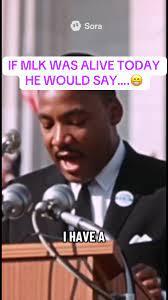

Why We Need to Embed AI Signatures at the Source
At the end of the day, AI-generated content is no longer some futuristic novelty. It's here. It's fast. And it's everywhere—filling up our feeds, infiltrating our DMs, and sometimes even making its way into news cycles or courtroom evidence. So here's the simple version: if we want to protect trust online, we need to stop leaving detection up to the platforms and start embedding that authenticity at the source.
In this post, I'll break down:
- What's happening now with labeling AI content (hint: it's messy).
- Why this should be baked into the generation process itself.
- What it would take to make this the norm across platforms.
Let's get into it.
The Patchwork Problem: Current Labels Aren't Cutting It
Right now, if AI content gets labeled, it's usually because a platform decides to step in and do it manually—or asks the user to self-report. Instagram, TikTok, and a few others have started prompting creators to flag AI-generated images or videos. That's a start.
But here's the problem: it's inconsistent. Different platforms have different policies. And not every user is honest—or even aware—that the content they're sharing was AI-made. If you download something from an AI tool and repost it, the tag often disappears. And let's not forget: bad actors can just crop or edit around any watermark.
The Current State of AI Content Labeling
Let's break down what's actually happening across major platforms:
Instagram and Facebook (Meta)
- Requires users to manually disclose AI-generated content
- Uses detection algorithms for some obvious AI images
- Labels appear inconsistently and can be missing entirely on reshares
- No technical enforcement mechanism—purely voluntary
TikTok
- Added AI-generated content labels in 2024
- Relies heavily on user self-reporting
- Detection algorithms trigger labels on some videos
- Labels can be bypassed by downloading and re-uploading
X (formerly Twitter)
- Community Notes sometimes flag AI content
- No official labeling system for AI-generated media
- Relies on user awareness and reporting
YouTube
- Requires disclosure for "realistic" AI-generated content
- Manual checkbox system during upload
- No automated detection or enforcement
- Labels only appear if creator opts in
The pattern is clear: we're asking people to voluntarily label their content or relying on after-the-fact detection. Neither scales. Neither works reliably.
Why Current Approaches Fail
The fundamental issue with post-hoc labeling is that it's adversarial by nature. You're asking platforms to detect something that creators or bad actors actively want to hide. This creates a cat-and-mouse game where detection methods are constantly being circumvented.
Problem 1: Watermarks Can Be Stripped Traditional visible watermarks can be cropped out, edited over, or removed with AI-powered tools. Some research shows that 80% of AI watermarks can be removed with basic photo editing.
Problem 2: Metadata Gets Lost Even when AI tools embed metadata (like C2PA), that data is stripped when content is downloaded, screenshotted, or passed through social media compression algorithms.
Problem 3: Self-Reporting Doesn't Scale Expecting billions of users to correctly label AI content is unrealistic. Many don't know their content is AI-generated (think AI-enhanced photos), some don't care, and bad actors actively avoid labeling.
Problem 4: Detection Is a Moving Target As AI generation improves, detection becomes harder. What worked to detect DALL-E 2 images doesn't work on DALL-E 3. The arms race is fundamentally unwinnable from the detection side.
In short, the current state is:
- Inconsistent across platforms
- Easy to strip or fake
- Completely reactive instead of proactive
That's not a strong baseline for something as powerful and disruptive as generative AI.
The Better Path: Embed the Signature Into the Generation Stack
So here's where I stand: the ability to detect AI content shouldn't depend on platforms tagging things after the fact. It should be part of the generation process itself.
Imagine every AI image, video, or voice clip came with a baked-in signature—something embedded at the point of creation, not slapped on afterward. Something invisible to the eye but verifiable through metadata, hash-based verification, or cryptographic proof.
Think EXIF data for cameras—but standardized and tamper-resistant. That way:
- The origin of the content can be traced.
- Anyone using detection tools can verify authenticity.
- Platforms have a common source of truth—not just vibes.
This approach flips the script. Instead of chasing AI content with patchwork moderation, we'd be building a web where transparency is the default.
How Source-Level Signatures Would Work
The concept is straightforward but requires technical implementation at multiple levels:
Layer 1: Generation-Time Embedding When an AI model generates an image, video, or audio file, the signature is written directly into the file structure. This isn't metadata that sits on top—it's woven into the pixel data, audio samples, or video frames themselves.
Layer 2: Cryptographic Verification Each signature includes a cryptographic hash that can be verified against the original generation parameters. This means anyone can check:
- Which model created the content
- When it was created
- What prompt or input was used (optionally)
- Whether the file has been modified since generation
Layer 3: Steganographic Resilience The signature isn't just added to metadata or a watermark layer. It's distributed throughout the content using steganographic techniques that survive compression, cropping, and format conversion.
Layer 4: Blockchain or Distributed Ledger (Optional) For high-stakes use cases (legal documents, news media, identity verification), signatures could be logged to an immutable ledger, creating an auditable trail of content provenance.
Real-World Examples of Source-Level Signing
Some tools are already moving in this direction:
C2PA (Coalition for Content Provenance and Authenticity) Led by Adobe, Microsoft, and others, C2PA embeds tamper-evident metadata into media files. It tracks the entire editing chain—who created it, which tools were used, and what changes were made.
Google's SynthID Developed by DeepMind, SynthID embeds invisible watermarks directly into AI-generated images. The watermark survives JPEG compression, cropping, and color adjustments. It's imperceptible to humans but detectable with the right tools.
Meta's Stable Signature Meta's research team built a watermarking system that embeds signatures into the latent space of diffusion models. The watermark is generated as part of the image creation process, making it resistant to removal.
OpenAI's Audio Fingerprinting OpenAI embeds audio watermarks into content generated by their voice synthesis models. The watermarks survive audio compression and format conversion.
These aren't perfect yet—but they prove the concept. The technology exists. What's missing is adoption and standardization.
What Would It Take?
To make this a reality, three things need to happen:
1. Toolmakers Have to Embed the Signature Layer
Every major generation tool—whether it's DALL·E, MidJourney, ElevenLabs, or Sora—should be embedding a unique identifier by default. No opt-out. No workaround. Just built-in.
This is where regulation might play a role. The EU's AI Act already mandates transparency for AI-generated content. Similar regulations in the U.S., China, and other major markets could require signature embedding as a licensing condition for AI platforms.
What This Looks Like in Practice:
- DALL·E generates an image → signature embedded automatically
- User downloads the image → signature persists in file
- User uploads to Instagram → Instagram reads signature and displays label
- Someone screenshots the image → signature degrades but partial detection still possible
The key is making signature generation a core feature of the model architecture, not an optional add-on.
2. A Cross-Industry Standard Needs to Emerge
Think something like a "Content Authenticity Protocol." Open-source, interoperable, and verifiable across platforms. Something Adobe, OpenAI, Google, Meta, and startups alike can plug into.
Why Standards Matter: Without a common standard, we end up with fragmentation—OpenAI's signatures don't work with Meta's detectors, Adobe's C2PA isn't compatible with Google's SynthID, and so on. Users and platforms can't reliably verify content if every tool uses a different approach.
What a Good Standard Includes:
- Format Specification: How signatures are embedded (steganography, metadata, both)
- Verification Protocol: How third parties can check signatures without accessing proprietary model information
- Privacy Considerations: What information is revealed (model name, yes; user prompt, maybe not)
- Versioning: How to handle updates as technology evolves
- Open Source Reference Implementation: So anyone can build compatible tools
The C2PA is the closest thing we have to this standard today, but it needs broader adoption and more robust tamper-resistance for AI-specific use cases.
3. Browsers, Platforms, and End-Users Need Lightweight Detectors
Just like we can inspect SSL certificates, verify source code, or check website reputations—we need fast ways to scan and validate media integrity.
Browser Integration: Imagine right-clicking an image and selecting "Verify Content Source." The browser reads the embedded signature and displays:
- Generated by: DALL·E 3
- Created: October 1, 2025
- Modified: No
- Verification: Valid
Platform Integration: Social media platforms should automatically read signatures and display labels. Not as a "shame" badge, but as information. "This image was created with AI" next to "This video was shot on iPhone."
Creator Tools: Content management systems, design tools, and publishing platforms should show signature status. Journalists uploading to a CMS would see if an image has a valid AI signature or has been tampered with.
This isn't just about labeling—it's about trust infrastructure. And the earlier we build it, the less messy the web becomes.
The Business Case for Signature Embedding
Beyond the social good argument, there's a strong business case for AI companies to adopt source-level signatures:
Brand Protection
If your platform generates content that's used in misinformation campaigns, your brand gets dragged into the mess. Signature embedding lets you say: "This wasn't created with our tool" or "This was created by us, but here's what was changed afterward."
Legal Shield
As regulations tighten around AI-generated content, having built-in signatures demonstrates compliance. It's proof you're taking responsibility for the content your models create.
Premium Feature Differentiation
"Our AI includes cryptographic signatures for content authenticity" becomes a selling point for enterprise customers—news organizations, legal firms, government contractors—who need verifiable provenance.
Platform Partnerships
Social media platforms want to label AI content but can't do it reliably. If your tool embeds signatures that platforms can easily read, you become the preferred partner.
User Trust
Creators who use AI tools with signatures can prove their content is authentic (or disclose that it's AI-enhanced). This builds trust with audiences who are increasingly skeptical of online media.
Challenges and Counterarguments
Let's address the elephant in the room: this won't be easy, and not everyone will like it.
Challenge 1: Performance Overhead
Embedding signatures adds computational cost. For real-time applications (live video filters, instant voice cloning), this could impact user experience.
Response: Early research shows signature embedding adds 2-5% to generation time. For most use cases, that's acceptable. For real-time apps, hardware acceleration and optimized algorithms can minimize impact.
Challenge 2: Privacy Concerns
If signatures reveal too much—user prompts, location data, device info—they become a privacy risk.
Response: Signatures should be minimal: model name, timestamp, verification hash. Prompts and user data should be opt-in, not default.
Challenge 3: Open Source Models
How do you enforce signature embedding in open-source models that anyone can fork and modify?
Response: You can't, fully. But if major platforms (Instagram, YouTube, TikTok) require signatures for algorithmic promotion or monetization, even open-source users have incentive to include them. Plus, legitimate use cases (journalism, research, creative work) benefit from signatures.
Challenge 4: Bad Actors Will Build Signature-Free Tools
Absolutely. Just like people build malware and phishing sites despite security measures. But that doesn't mean we shouldn't secure the legitimate ecosystem. Signature-free content becomes the red flag, not the norm.
Challenge 5: It Might Stifle Creativity
Some artists worry that labeling AI-generated art will reduce its perceived value or lead to discrimination.
Response: Transparency doesn't devalue art—it contextualizes it. Photographers don't hide that they use cameras. Graphic designers don't hide that they use Photoshop. AI is a tool. Signatures just make it clear which tools were used.
The Road Ahead: Policy, Adoption, and Standardization
For source-level signatures to become the norm, we need movement on three fronts:
Policy and Regulation
Governments are already moving. The EU AI Act, U.S. executive orders on AI safety, and China's AI regulations all touch on transparency and content provenance. The next step is explicit requirements for signature embedding.
What Good Policy Looks Like:
- Mandate signature embedding for commercial AI tools
- Require platforms to display signature information when available
- Create penalties for intentionally stripping signatures
- Fund open-source tooling for verification
Industry Adoption
The big players need to commit. OpenAI, Google, Meta, Adobe, Microsoft—these companies shape the ecosystem. If they all adopt C2PA or a similar standard, everyone else will follow.
What We're Seeing:
- Adobe already ships C2PA in Photoshop, Lightroom, and other tools
- OpenAI has discussed watermarking for ChatGPT-generated text
- Meta is testing Stable Signature for Llama image models
- Google deployed SynthID for Imagen
The momentum is building. Now we need coordination.
Public Awareness
Most people don't know signatures are possible, let alone important. Education campaigns—"Check the source" for AI content, like "Check the URL" for phishing—can drive demand.
What Needs to Happen:
- Teach media literacy in schools (how to verify content)
- Public service campaigns about AI content verification
- Browser vendors promoting verification tools
- Platforms making signature info visible and accessible
Quick Takeaways
- AI content is everywhere, but labeling is inconsistent and easily bypassed.
- The best fix is upstream: embed a verifiable signature during generation.
- That signature should be platform-agnostic and hard to remove.
- Toolmakers, platforms, and users all have a role to play.
- If we build this now, we avoid chaos later.
Final Thought: Don't Wait for the Mess to Scale
Let's be real: the longer we wait to implement this kind of signature system, the more damage gets done. Deepfakes spread faster than fact-checks. Brands get spoofed. People get fooled. And platforms play whack-a-mole with the fallout.
But it doesn't have to be that way.
If we treat AI content like we do creative IP—with traceability and ownership baked in—we can build a web where authenticity isn't an afterthought. It's the default.
So let's embed the signature. Make it part of the stack. Standardize it. And move the whole ecosystem forward—before the next wave hits.
The technology is ready. The standards are emerging. The regulations are coming. All we need now is the will to make it happen—and the recognition that trust infrastructure is just as important as the models themselves.
Start with your own projects. If you're building AI tools, add signatures. If you're consuming AI content, demand them. If you're running a platform, support them.
The future of online trust depends on what we build today.
Frequently Asked Questions (FAQs)
Q1: Won't signatures slow down AI generation?
A1: Early implementations add 2-5% overhead, which is negligible for most use cases. As the technology matures and hardware acceleration improves, this cost will decrease further. The trade-off for authenticity verification is worth it.
Q2: Can't bad actors just remove the signatures?
A2: Sophisticated steganographic signatures survive cropping, compression, and format changes. While determined attackers can degrade signatures, they can't cleanly remove them without destroying image quality. The goal isn't perfect security—it's raising the cost of forgery.
Q3: How do signatures work with AI-assisted (not fully AI-generated) content?
A3: This is where standards matter. Signatures can indicate degrees of AI involvement—"AI-enhanced photo" vs. "fully AI-generated image." The signature metadata can track the editing chain, showing which parts were AI-assisted.
Q4: What about open-source models that don't include signatures?
A4: Platforms can incentivize signatures by prioritizing signed content in algorithms or gating monetization behind verification. Over time, signatures become table stakes for legitimate distribution, even for open-source models.
Q5: Does this mean AI art is "lesser" than human art?
A5: Not at all. It's about transparency, not value judgment. Just like photographers disclose camera settings or digital artists list their tools, AI creators should disclose their process. Authenticity is about honesty, not hierarchy.
If this article resonated with you, share it with your network. The conversation around AI authenticity is just beginning, and we need more voices pushing for source-level solutions. What's your take—should signatures be mandatory, optional, or something else? Let's discuss.
References
- Coalition for Content Provenance and Authenticity (C2PA). (2024). Technical Specification v2.0. C2PA Standards
- Wen, H., et al. (2023). Tree-Ring Watermarks: Fingerprints for Diffusion Images that are Invisible and Robust. arXiv preprint arXiv:2305.20030
- Fernandez, P., et al. (2023). The Stable Signature: Rooting Watermarks in Latent Diffusion Models. Meta AI Research
- European Parliament. (2024). Regulation on Artificial Intelligence (AI Act). Official Journal of the European Union
- Zhao, X., et al. (2023). Invisible Image Watermarks Are Provably Removable Using Generative AI. arXiv preprint arXiv:2306.01953