
Internal AI Agents: Powering Faster Teams, Smarter Apps
The landscape of internal software is undergoing a profound transformation, moving away from monolithic, often cumbersome systems towards a more agile, intelligent, and user-centric paradigm. This shift, characterized by the embrace of smaller, composable applications and the integration of sophisticated internal software AI agents, promises to create faster, more efficient teams and fundamentally reshape how organizations operate.
For Technology Teams, Product Leaders, and Business Executives alike, understanding this evolution is crucial for maintaining a competitive edge. This article, "The Future of Internal Software: Smaller Apps, Smarter Agents, Faster Teams," will guide you through this pivotal change. We'll explore the strategic advantages of moving towards modular applications, delve into how internal software AI agents are transforming operational intelligence, and illuminate the combined power these innovations bring to team productivity. Prepare to discover how these advancements can optimize internal business workflows, enhance employee productivity with smart tools, and unlock unprecedented levels of organizational agility.
The Evolution Towards Smaller, Composable Apps
Historically, internal software solutions were often developed as sprawling, all-encompassing applications designed to handle numerous functions. While comprehensive, these monolithic systems frequently suffered from inflexibility, slow development cycles, and difficult maintenance. A single change could ripple through the entire system, leading to extensive testing and potential downtime, a pain point many Technology Teams have wrestled with for years. For Product Leaders, developing new features or adapting to changing user needs within such a rigid structure felt like moving mountains.
The modern approach champions modularity and reusability, advocating for smaller, composable applications or micro-apps. These are purpose-built tools designed to address specific needs or workflows, often built on low-code/no-code platforms, enabling rapid development and deployment. This architectural shift aligns with Gartner's concept of the "composable enterprise," where organizations assemble capabilities from interchangeable building blocks rather than relying on tightly coupled, monolithic systems (Gartner, n.d.). Such a structure allows businesses to adapt more quickly to changing demands, integrate new technologies seamlessly, and provide employees with precisely the tools they need, when they need them, rather than a one-size-fits-all behemoth. This focus on modular internal applications significantly boosts agility.
For Technology Teams, moving to a composable architecture means breaking free from the maintenance burden of legacy systems, enabling faster iteration, and leveraging modern development practices like microservices. You can deploy specialized tools for specific departments (e.g., a micro-app for HR onboarding, another for project expense tracking), reducing the scope and complexity of each individual deployment. Product Leaders gain immense flexibility, able to test and iterate on solutions much faster, delivering immediate value without overhauling an entire system. Imagine rapidly deploying a new feature for customer service teams in weeks instead of months, directly responding to user feedback. For Business Executives, this translates into quicker ROI on software investments and the ability to pivot business capabilities dynamically. The unique insight here is that this isn't just a technical preference; it's a strategic move enabling business composability — the ability to rapidly reconfigure business capabilities to meet market demands, which is a key competitive differentiator in today's fast-paced environment. This agility, fostered by composable enterprise software, allows organizations to remain responsive and innovative.
Smarter Agents: The Rise of AI in Internal Operations
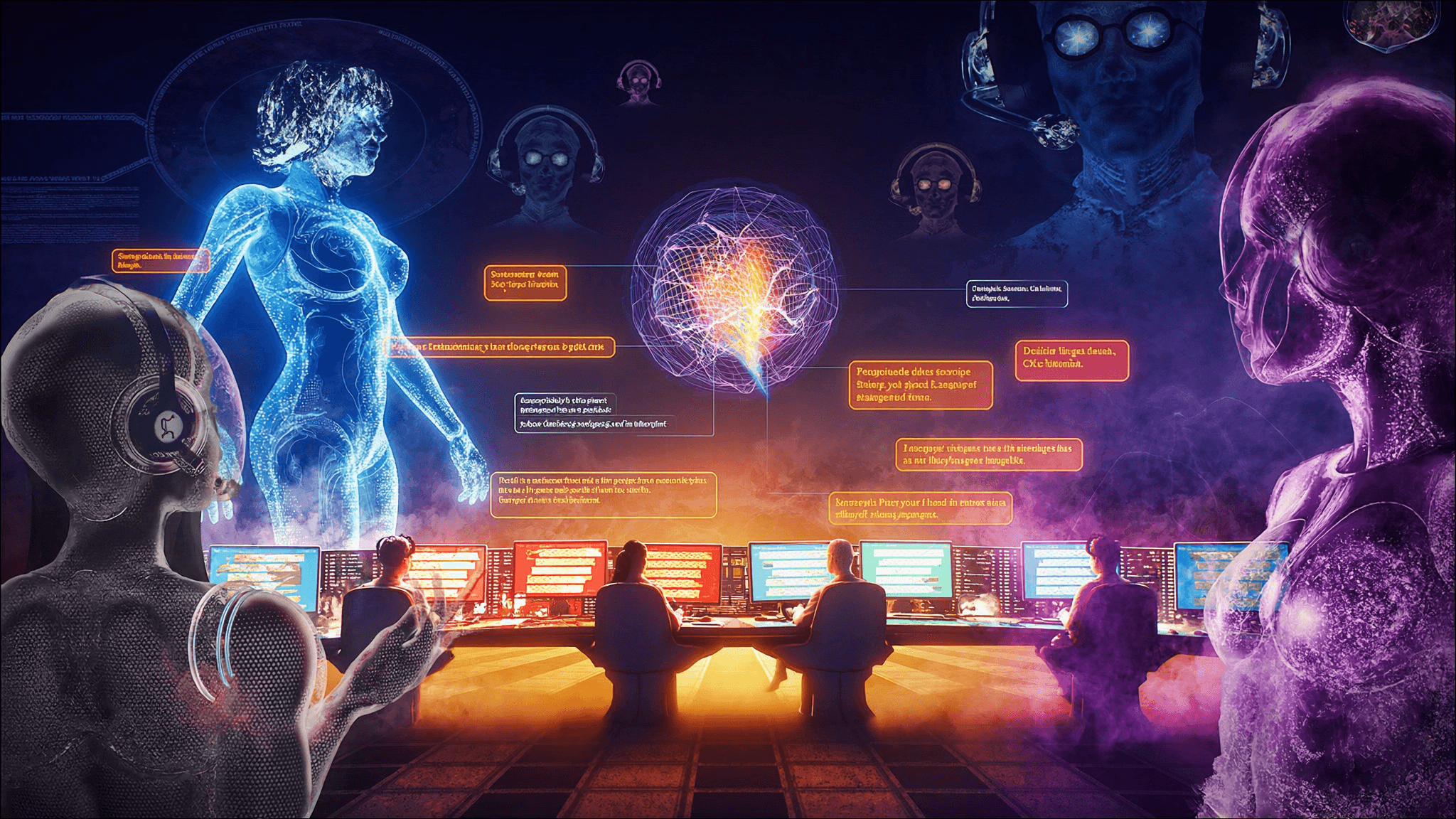
Beyond smaller apps, the true innovation lies in the emergence of smarter AI agents designed to augment human capabilities within internal processes. These internal software AI agents are not merely automation scripts; they are intelligent entities capable of understanding context, making decisions, learning from interactions, and performing complex tasks that typically require human cognition. As Technology Teams, you're moving beyond simple robotic process automation (RPA) to intelligent systems that can truly act as digital colleagues.
Leveraging advancements in generative AI and large language models (LLMs), these agents can perform a myriad of functions:
- Automating repetitive tasks: Handling data entry, scheduling, report generation, and initial customer support inquiries, freeing up valuable human hours.
- Providing intelligent assistance: Acting as AI co-pilots for employees, retrieving specific information from vast internal knowledge bases, drafting emails, summarizing documents, or even suggesting next steps in a complex workflow. Imagine a marketing agent drafting initial campaign copy, or an HR agent answering common policy questions instantly.
- Optimizing workflows: Identifying bottlenecks, suggesting process improvements, and even dynamically re-routing tasks based on real-time data, ensuring optimal efficiency.
- Personalizing experiences: Tailoring information and recommendations to individual employees based on their roles and past interactions, thereby reducing cognitive load and improving relevance.
Deloitte's Tech Trends consistently highlight the accelerating impact of intelligent automation and AI in transforming enterprise operations, moving beyond simple task automation to more cognitive and decision-making roles (Deloitte, 2023). These intelligent automation for back-office operations free up human employees to focus on higher-value, more strategic work, fundamentally changing the nature of work itself. As Davenport, Wilson, and Morison (2024) explain in the Harvard Business Review, AI is poised to transform white-collar work by acting as powerful co-pilots, enhancing human capabilities rather than replacing them entirely. For Business Executives, this represents a significant opportunity to redefine operational efficiency and drive bottom-line impact. A unique insight is that these agents aren't just about efficiency; they're about cognitive offloading for employees. By handling mundane or information-intensive tasks, AI agents free up human mental bandwidth, allowing employees to dedicate their unique creativity, critical thinking, and emotional intelligence to more complex, human-centric challenges, ultimately improving job satisfaction and retention—a critical win for Product Leaders focused on user experience and employee engagement.
Empowering Faster Teams and Enhanced Productivity
The synergy between smaller, composable apps and smarter internal software AI agents directly translates into faster, more productive teams. When employees have access to precisely tailored tools that are intuitive and easy to use, and when AI agents handle the mundane or complex information retrieval, several benefits emerge that resonate deeply with Technology Teams, Product Leaders, and Business Executives alike. For Technology Teams, this integration simplifies deployments and reduces technical debt, as agents can manage data flows between modular applications seamlessly.
- Accelerated Decision-Making: AI agents can rapidly analyze vast datasets—often aggregated from multiple smaller apps—and present critical insights, enabling quicker, more informed decisions by reducing the time spent on data synthesis.
- Reduced Manual Effort: Automating routine tasks with internal software AI agents significantly reduces the time and effort employees spend on administrative overhead. Consider an expense reporting micro-app where an AI agent automatically categorizes receipts and flags policy violations, drastically cutting down review time.
- Enhanced Focus: With AI handling repetitive or information-gathering tasks, human teams can dedicate more cognitive energy to creative problem-solving, strategic planning, and complex interpersonal interactions—areas where human intelligence truly shines. This is key to enhancing employee productivity with smart tools.
- Greater Agility: The modular nature of smaller apps, combined with the adaptability of AI agents, allows organizations to pivot quickly, respond to market changes, and innovate at an unprecedented pace. Product Leaders can rapidly deploy new features for a micro-app, and AI agents can immediately learn to support these new functionalities.
- Improved Employee Satisfaction: By offloading tedious tasks and providing intelligent support, companies can reduce burnout and foster a more engaging work environment, contributing to higher morale and retention.
McKinsey & Company's research consistently points to AI as a catalyst for significant productivity gains across various industries, emphasizing its potential to unlock new value by transforming core business processes (McKinsey & Company, 2023). This transformation is particularly potent within internal operations, where the friction of legacy systems and manual processes has long hindered efficiency. Business Executives can see a clear ROI in terms of operational cost savings and increased output per employee. The unique insight here is that this combined approach fosters a culture of continuous improvement at the edge. Instead of top-down mandates, teams closest to the problem can rapidly deploy small apps with AI augmentation, leading to bottom-up innovation that organically optimizes internal business workflows and addresses specific pain points in real-time. This decentralization of innovation empowers employees and accelerates organizational learning.
Navigating the Challenges and Future Outlook
While the promise is immense, adopting internal AI software safely and leveraging these trends also presents challenges. Organizations, particularly Technology Teams, must address concerns around data privacy, ensuring compliance with regulations like GDPR and CCPA, and building robust security architectures around AI-driven systems. For Product Leaders, ethical AI deployment is paramount, demanding careful consideration of bias in algorithms, transparency in decision-making, and fairness in how agents interact with employees. Integration complexity can also be a hurdle, as these new modular apps and AI agents need to communicate effectively with existing legacy systems, requiring robust API strategies.
Furthermore, the rise of AI agents necessitates the development of new skill sets within the workforce. Technology Teams will need expertise in AI model deployment, data governance, and prompt engineering. Product Leaders must champion user-centric design for human-AI collaboration. Business Executives will need to invest in reskilling programs and foster a culture of continuous learning to adapt to evolving roles. Robust governance frameworks, continuous learning, and a focus on human-AI collaboration will be critical for successful implementation.
The future of enterprise internal tools is undeniably intelligent, modular, and human-centric. Organizations that strategically invest in developing or integrating smaller, composable applications powered by sophisticated internal software AI agents will be better positioned to foster truly faster, more adaptable teams. This evolution is not just about adopting new technology; it's about fundamentally rethinking how work gets done and empowering employees to operate at their highest potential in a rapidly changing world. As Technology Teams embark on this journey, focusing on scalable, secure, and maintainable architectures is key. Product Leaders must champion ethical development and prioritize the human-AI interaction experience. Business Executives, your leadership in driving this cultural shift towards embracing AI as a valuable partner is paramount. The ability to effectively harness this potent combination will be a defining competitive advantage for businesses aiming for sustained growth and innovation.
Quick Takeaways
- Shift from Monoliths to Micro-Apps: Embrace smaller, composable applications for greater agility, faster development cycles, and targeted solutions, aligning with the "composable enterprise" concept.
- AI Agents as Intelligent Co-Pilots: Deploy smart AI agents, powered by generative AI and LLMs, to automate repetitive tasks, provide intelligent assistance, optimize workflows, and personalize employee experiences.
- Synergy for Enhanced Productivity: The combination of modular apps and AI agents accelerates decision-making, significantly reduces manual effort, enhances focus, and fosters greater organizational agility.
- Cognitive Offloading for Higher Value Work: AI agents free up human employees from mundane tasks, allowing them to dedicate their cognitive energy to creative problem-solving and strategic initiatives, boosting job satisfaction.
- Navigating Implementation Challenges: Address critical concerns around data privacy, ethical AI deployment, integration complexity, and the need for new skill sets through robust governance and continuous learning.
- Strategic Competitive Advantage: Organizations that proactively invest in and strategically integrate these technologies will gain a significant competitive edge through increased efficiency, innovation, and adaptability.
- Culture of Continuous Improvement: This approach fosters bottom-up innovation, allowing teams at the "edge" to rapidly improve workflows with tailored apps and AI augmentation.
Conclusion
The transformation of internal software is not merely an incremental upgrade; it’s a paradigm shift towards a more intelligent, agile, and human-empowering operational model. We've seen how moving away from cumbersome monolithic systems towards smaller, composable applications offers unparalleled flexibility and speed for Technology Teams and Product Leaders. This modularity allows for rapid iteration and tailored solutions that directly address specific business needs.
Crucially, the integration of smarter internal software AI agents elevates these capabilities to a new dimension. These intelligent co-pilots, powered by advancements in generative AI and LLMs, are not just automating tasks; they are understanding context, making decisions, and learning, effectively offloading cognitive burdens from your teams. This powerful synergy—between purpose-built micro-apps and intelligent agents—is the engine driving "The Future of Internal Software: Smaller Apps, Smarter Agents, Faster Teams." It directly translates into enhancing employee productivity with smart tools, optimizing internal business workflows, and fostering a level of organizational agility previously unattainable.
For Business Executives, this future promises significant ROI through increased efficiency, faster market responsiveness, and improved employee satisfaction. For Product Leaders, it means the ability to deliver targeted, impactful solutions at speed. And for Technology Teams, it offers the opportunity to build modern, scalable, and maintainable architectures that drive innovation.
The path forward requires strategic vision and proactive action. It means facing challenges like data privacy and ethical AI head-on, fostering new skill sets, and championing a culture where human and AI collaboration thrives.
Call to Action: Don't wait for this future to arrive; build it. Technology Teams, begin exploring composable architectures and secure AI deployment frameworks. Product Leaders, start identifying key internal workflows ripe for AI augmentation and micro-app development, focusing on user-centric design and ethical considerations. Business Executives, initiate strategic discussions about pilot projects, invest in talent development, and champion this transformative shift across your organization to unlock unprecedented levels of efficiency, innovation, and competitive advantage. The time to embrace this intelligent, modular, and human-centric future for your internal software is now.
Frequently Asked Questions (FAQs)
1. What exactly are internal software AI agents, and how are they different from traditional automation?
Internal software AI agents are intelligent programs designed to augment human capabilities within an organization's operations. Unlike traditional automation (like RPA) which typically follows rigid, predefined rules, AI agents leverage advanced AI, particularly generative AI and LLMs, to understand context, learn from data, make decisions, and perform complex tasks that require cognitive ability. They act as intelligent internal automation, offering dynamic assistance rather than just executing repetitive scripts.
2. How do smaller, composable apps and AI agents work together to benefit a business?
Smaller, composable applications (micro-apps) provide a modular framework for specific business functions. AI agents integrate within or across these micro-apps to add intelligence. For example, an AI agent might analyze data from a project management micro-app, identify bottlenecks, and then interact with a scheduling micro-app to suggest adjustments. This synergy creates highly efficient and adaptable systems, enhancing overall boosting business agility with AI and allowing businesses to respond rapidly to changing needs.
3. What are the key benefits for employees when internal software AI agents are implemented?
Employees benefit significantly through AI co-pilots for employees that reduce manual effort on tedious or repetitive tasks, allowing them to focus on higher-value, more creative, and strategic work. AI agents provide intelligent assistance, rapid information retrieval, and personalized support, which can reduce cognitive load, improve decision-making, and lead to greater job satisfaction and overall enhancing employee productivity with smart tools.
4. What are the main challenges companies face when adopting internal AI software safely?
Key challenges include ensuring data privacy and security, addressing ethical AI concerns (like algorithmic bias and transparency), managing the complexity of integrating new AI systems with existing legacy infrastructure, and developing new skill sets within the workforce. Organizations must implement robust governance frameworks and invest in continuous learning to navigate these hurdles for ethical AI development for enterprises.
5. How can an organization begin to implement internal software AI agents and smaller apps effectively?
To begin getting started with internal AI solutions, organizations should start with pilot projects focusing on specific, high-impact workflows where AI and micro-apps can deliver immediate value. Assess current pain points, identify suitable use cases for AI augmentation, and choose low-code/no-code platforms for rapid micro-app development. Prioritize strong data governance, ethical considerations, and a phased integration strategy while fostering a culture of human-AI collaboration.
We Value Your Insights!
Thank you for diving into the future of internal software with us! We hope this article has provided valuable insights for Technology Teams, Product Leaders, and Business Executives looking to optimize their operations.
What are your thoughts on the synergy between smaller apps and internal AI agents? Have you already started implementing these strategies within your organization? Share your experiences and questions in the comments below!
If you found this article informative, please share it with your colleagues and network. Let's spread the word about how smarter internal tools can empower faster, more efficient teams.